

Measure.Protect.Follow up. — Dr. Taraneh Majidi
Internal Medicine Specialist, Adult Nephrology Subspecialist Tabriz
Kidney disease is often silent. Blood and urine tests with regular follow-up show how your kidneys are working.
Understand the number first, then plan for the kidneys.
Dr. Taraneh Majidi is an internal medicine specialist with a subspecialty in adult kidney disease (nephrology) in Tabriz. Kidney disease usually progresses silently, and patients often come to the doctor with a single number: a high creatinine, a low eGFR or protein in the urine. This site helps you understand what these numbers mean, know when to follow up and why regular tests matter. The aim of treating chronic kidney disease is to slow its course, keep kidney function and prevent complications. Dr. Majidi sees adults only.
More about the doctorWhat is worrying you?
Tap what you are facing to reach the matching page. This list is not a diagnosis; it only points you to the right page.
- High creatinine
- Low eGFR
- Very foamy urine
- Protein or blood in the urine
- Swollen legs or puffy eyes
- Blood pressure that medicines do not lower
- Diabetes for many years
- Kidney stones that keep coming back
- Before a CT with contrast
Sharply reduced or no urine, sudden shortness of breath or swelling, flank pain with fever and chills, and a lot of blood in the urine cannot wait for an appointment. In an emergency, call 115 (Iran's emergency number). When should I call urgently?
Kidney conditions, in plain language.
Every kidney condition has its own course. These pages explain what the condition is, how it is investigated and how treatment generally works. Your diagnosis and treatment plan are decided by the doctor after an examination.
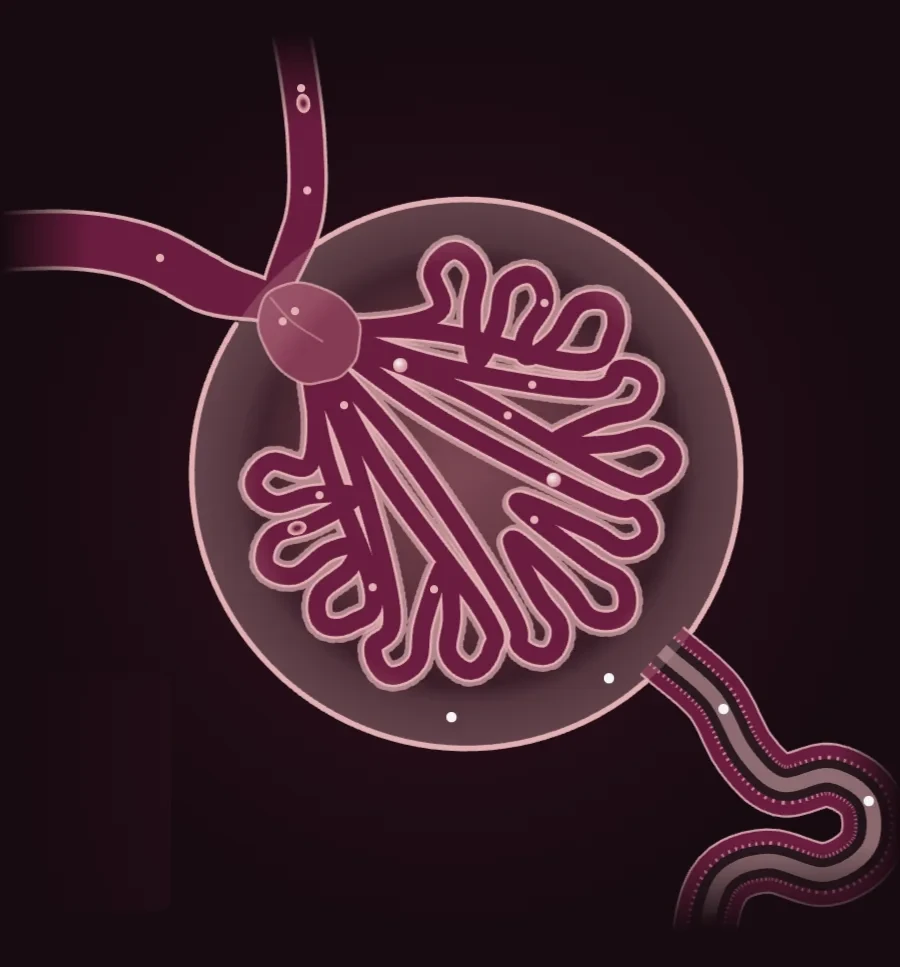
Chronic kidney disease and kidney failure
Chronic kidney disease means the kidneys have been damaged, or have worked below normal, for a long time, at least three months. Most of the time it has no symptoms and only blood and urine tests show it. This page explains what the stages mean, how it is assessed and what helps slow it down.
Read moreProtein or blood in the urine
Protein or blood in the urine is not always a serious illness, but sometimes it is the first sign of damage to the kidney's filters (the glomeruli). This page explains what these findings mean, which tests settle the question, what nephrotic syndrome is and when to act quickly.
Read moreKidneys in diabetes and high blood pressure
Diabetes and high blood pressure are leading causes of chronic kidney disease, and kidney disease itself raises blood pressure. This page explains why a yearly kidney test is needed, what treatment-resistant blood pressure means and what a patient can do to protect the kidneys.
Read moreKidney stones: finding the cause and preventing them
Kidney stones are common, and after one stone another becomes more likely. This page explains how stones form and what they are made of, what finding the cause and prevention involve, and where the work of the urologist and the nephrologist divides.
Read morePreparing for dialysis and transplant
If kidney disease advances, dialysis or a kidney transplant may become necessary. Getting to know the options early gives you time to decide with a clearer mind. This page is educational only and covers the types of dialysis, transplant, care without dialysis and practical preparation.
Read more
From the first visit to follow-up in the years ahead
Kidney care does not finish in one go: it is adjusted over time and with your test results. This is the general path, and it differs for each patient.
- Step 1 of 5.
Listening and reviewing medicines
A kidney assessment usually starts with your history and a review of your medicines. Bring a list of all your medicines and supplements, and your earlier test results.
- Step 2 of 5.
Blood and urine tests
Creatinine, eGFR and a urine test show how well the kidneys work and whether protein is getting through. No single result is a diagnosis.
- Step 3 of 5.
Finding the cause and stage
The results are read together to make the cause and stage as clear as possible. Sometimes an ultrasound or further tests are needed too.
- Step 4 of 5.
A plan to protect the kidneys
The aim is to slow the disease and prevent complications, and the plan changes with your test results. Never stop a medicine on your own.
- Step 5 of 5.
Regular follow-up
Kidney disease usually needs follow-up for years. Regular tests show the trend, and the plan is adjusted with them.
You are not alone on this path.
Treating kidney disease is more than visits. Regular tests, imaging, specialty medicines and follow-up are all part of it. The support team coordinates these so that you and your family spend less time chasing them.
Lab tests and blood sampling at home
Following kidney disease depends on regular tests. The support team arranges the appointment, the sampling and the follow-up of results.
Imaging and ultrasound
Quick appointments and results, and second reads of CT and MRI images.
Nutrition and rehabilitation
The support team books appointments and refers you to rehabilitation and health specialists.
Pharmacy and specialty medicines
Help getting specialty medicines, with quick delivery for Tabriz residents.
Fast referral to specialists and sub-specialists
If you need another doctor, the support team books the appointment and refers you.
Treatment and rehabilitation at home
When getting out is hard, part of treatment and rehabilitation comes to you.
Services marked "Free" on the support form are provided at no cost.
Simple answers to the first questions.
My creatinine is high; does that mean my kidneys have failed?
Not necessarily. Creatinine is just one number, and it varies with age, sex, muscle mass, dehydration and some medicines. The doctor reads it together with your eGFR, a urine test and your history. Do not dismiss a high number, and do not put off follow-up.
What is eGFR and what does my number mean?
The eGFR is an estimate of how well the kidneys filter the blood, calculated from creatinine, age and sex. Its meaning has to be read together with a urine test and the trend over several tests, not from a single result.
My urine is foamy; does it matter?
Foamy urine is not always a sign of disease, but if it keeps happening or comes with swollen legs or puffy eyes, a urine test is needed to look for protein. Seeing foam alone is not a diagnosis.
Will I need dialysis?
In chronic kidney disease, dialysis usually comes up at an advanced stage, and the decision rests on your tests and your doctor. The aim of regular follow-up is to slow the disease and keep as much kidney function as possible. If you want to know more early, read the educational page on dialysis and transplant.
How much water should I drink, and should I cut salt and protein?
The right amount depends on the type and stage of the disease, your medicines and your tests, and it is not the same for everyone. Do not start a fixed diet or number without advice from your doctor or a dietitian.
Which painkillers are bad for the kidneys?
Some painkillers, especially non-steroidal anti-inflammatory drugs, which are also sold without a prescription, can harm the kidneys. Ask before taking any painkiller or supplement, and do not stop a prescribed medicine on your own.
Should I see a nephrologist or a urologist?
A nephrologist deals with how the kidneys work and with medical kidney disease, such as a high creatinine, protein in the urine and kidney-related blood pressure. A urologist mostly deals with structural and surgical problems of the urinary tract. Kidney stones can involve both. If you are unsure, tell support when you book.
What should I bring to the first visit?
Earlier creatinine and urine test results, ultrasound reports and a list of all your medicines and supplements (herbal ones too). If something is missing, come anyway.
Do you see children?
Dr. Majidi is a subspecialist in adult kidney disease and sees adults.
Do you work with insurance?
Details will be announced once the doctor confirms them.
Do you offer online follow-up?
Details will be announced once the doctor confirms them.
These answers are general and do not replace your doctor's advice for your situation.
The first step, a calm conversation.
Go to the booking page or talk to support. Either way, we are with you.
Support number